
The Tongue

The Tongue: A Small Muscle With a Big Job
Your tongue plays an important role in breathing, swallowing, chewing, speech, sleep, facial development, and oral health. When the tongue is functioning well, it should rest gently against the roof of the mouth, support nasal breathing, and work in harmony with the muscles of the face and jaw.
When tongue posture or oral muscle function is not ideal, the body often compensates in ways that can impact both children and adults over time.

Why Tongue Posture Matters
Healthy tongue posture means the tongue naturally rests on the palate (roof of the mouth) with the lips closed and breathing happening through the nose.
Proper tongue posture may help support:
Healthy jaw and facial development
Nasal breathing
Better swallowing patterns
Improved oral rest posture
Airway health and sleep quality
Orthodontic stability
Clearer speech patterns
Low tongue posture may be associated with:
Mouth breathing
Snoring or poor sleep quality
Crowded teeth or narrow palate
Forward head posture
TMJ tension
Difficulty chewing or swallowing
Orthodontic relapse
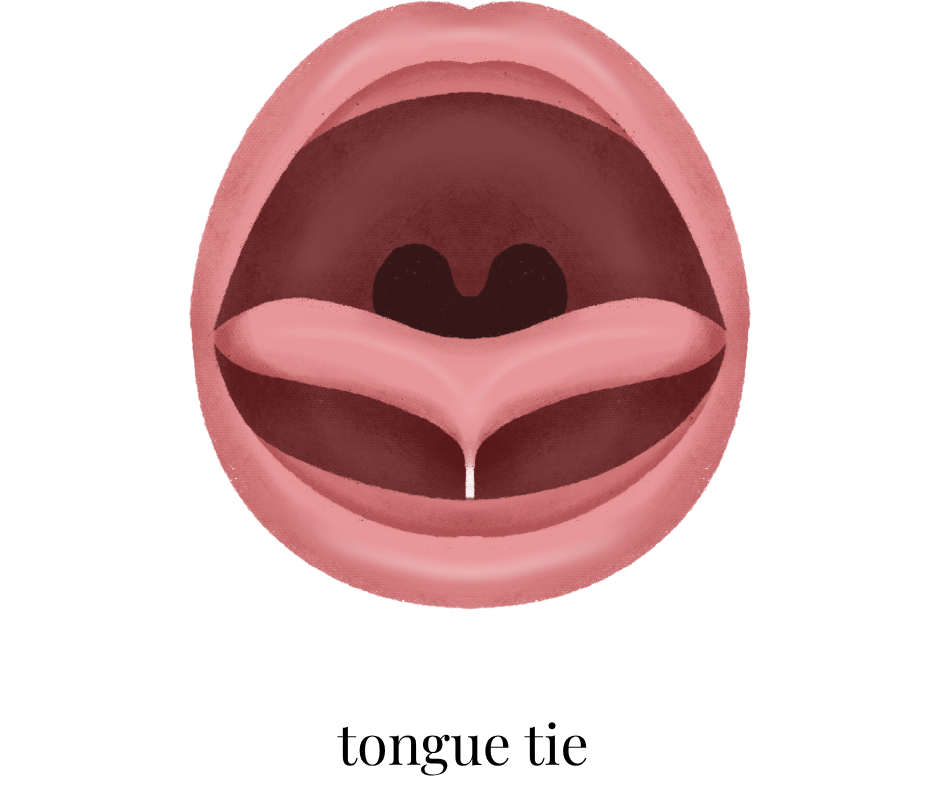
What Is a Tongue Tie?
A tongue tie (also called ankyloglossia) occurs when the tissue under the tongue restricts normal tongue movement. Some tongue ties are obvious, while others are more subtle and may still impact function.
Tongue ties can affect:
Breastfeeding or bottle feeding
Speech development
Swallowing patterns
Tongue posture
Sleep and airway function
Oral development
Tension in the neck, jaw, or face
Not everyone with a tongue tie needs treatment. A functional assessment helps determine whether the tongue is moving and functioning properly.
Signs of Oral Dysfunction
Every patient is different, but common signs may include:
Mouth breathing
Snoring
Teeth grinding
Open-mouth posture
Tongue thrust swallowing
Speech concerns
Difficulty keeping lips sealed
Frequent orthodontic relapse
Jaw tension or TMJ discomfort
Fatigue or poor sleep quality
In children, oral dysfunction may also contribute to:
Prolonged thumb sucking or pacifier habits
Picky eating
Messy eating
Dark circles under the eyes
Hyperactivity or restless sleep
Delayed oral development
Our Approach
At Breathe Well Collective, we take a whole-body, functional approach to oral health and airway development. We work to identify the root causes of oral dysfunction and create individualized treatment plans that support long-term function, breathing, and wellness.
Whether you are seeking support for yourself or your child, our goal is to provide education, guidance, and compassionate care in a supportive environment!